 531-355-1234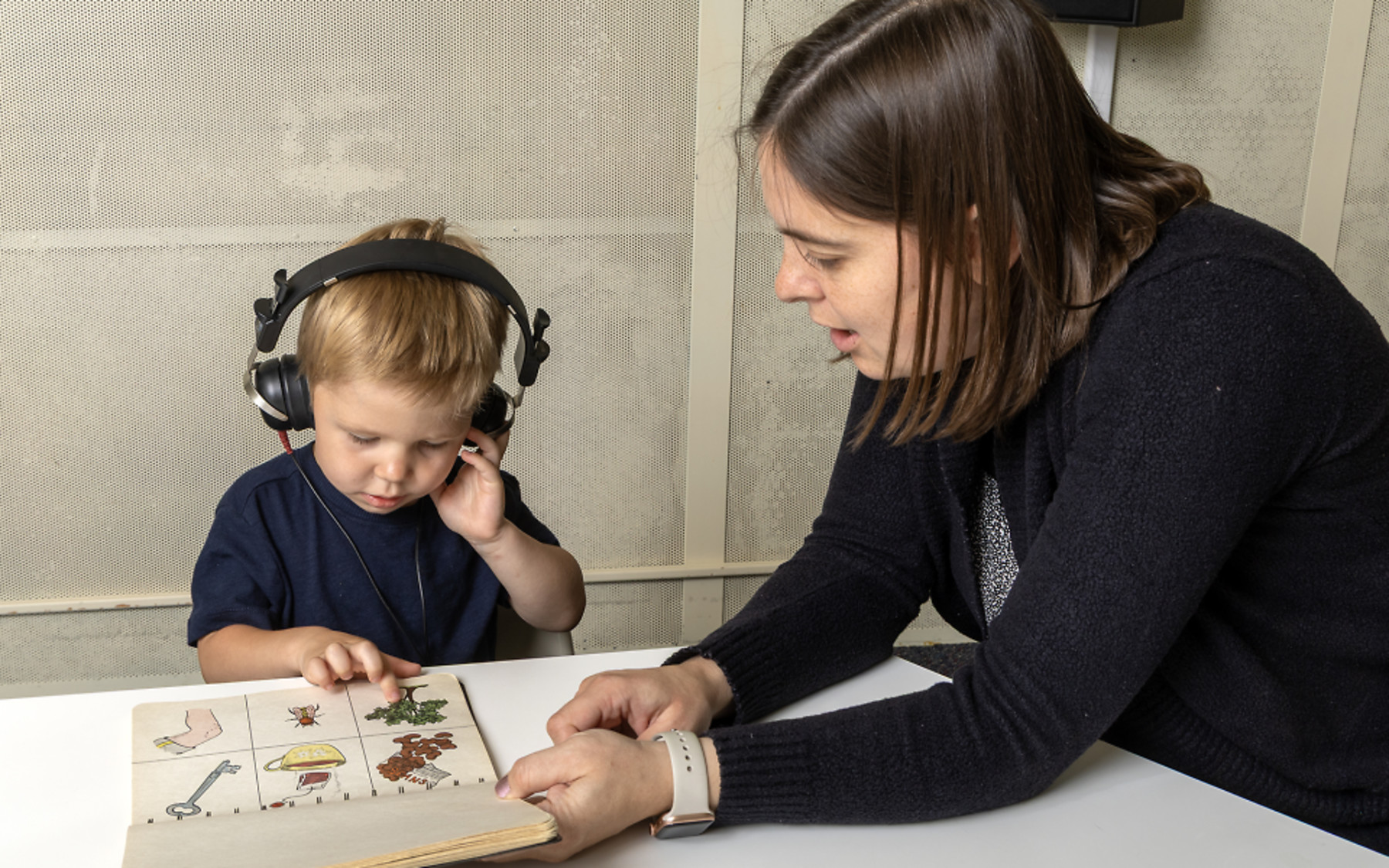
The Pediatric Audiologist: Helping Families of Children Who are Hard of Hearing
Newborn Hearing Screening
A baby receives a newborn hearing screening prior to discharge from the hospital. If a baby does not pass the newborn hearing screening, or has other risk factors associated with hearing loss, he or she should be referred for follow-up by an audiologist about two to four weeks after leaving the hospital.
Follow-up Visit - Newborn Hearing Tests
- Tympanogram – a measure to check for middle ear fluid.
- Distortion Product Otoacoustic Emissions (DPOAE) screening – a screening that looks at how the inner ear is working. Passing a DPOAE screening typically suggests normal to near – normal hearing sensitivity.
- Auditory Brainstem Response (ABR) – a test that looks at how the hearing nerve is working and provides information about the softest level that a patient can hear. The ABR test can rule out a problem with the hearing nerve and/or provide more specific information about how well a patient can hear.
After the hearing tests are completed, the audiologist explains the test results to the family during the visit. The baby’s family does not have to wait for results of the hearing testing to be interpreted by a medical doctor or other healthcare professional. It is also during this visit that the audiologist and family will discuss further hearing tests (if necessary), such as a second test to confirm findings that suggest hearing loss. The audiologist will also make referrals to other medical or early intervention professionals, such as an Ear Nose and Throat (ENT) doctor, as well as to the child’s local school district for early childhood development services.
It is an audiologist’s job to not only report these test results and make appropriate recommendations regarding the baby’s hearing sensitivity but also to create an atmosphere in which family members are comfortable to ask questions and discuss how they are feeling about the test results and baby’s daily responses to sound.
Audiologists follow many researched protocols. They strive to:
- Confirm hearing loss by age three months
- Appropriately fit a baby who has hearing loss with amplification by the time he or she reaches 6 months of age; however, many babies are fit shortly after the confirmation, or at the three-month follow-up visit.
It is during the first year that the family and audiologist get to know each other and team up to ensure the best possible hearing aid fitting in order to promote speech and language development consistent with the baby’s potential.
Child identified with hearing loss – The Infant and Toddler Years
When a child is identified with hearing loss, during the infant and toddler years, follow-up visits with the audiologist are frequent. Behavioral hearing testing is an important component of these visits as it helps monitor the child’s hearing loss. There are two techniques that are used for behavioral hearing testing in young children:
- Conditioned Play Audiometry (CPA) may be used with children about 2 or 2 ½ years of age to complete hearing tests. During CPA, a child places a block in a bucket, puts a ring on a tower, or completes a similar play task every time he or she hears the sound. A test assistant sits in the booth to help with this testing.
During follow-up visits with the audiologist, the child’s hearing aids are to be checked to ensure they are functioning and earmold impressions will be taken, as needed. New earmolds are needed every few months, initially, then less often (about yearly) as a child becomes school-age. The audiologist may also ask specific questions in order to complete outcome questionnaires to monitor auditory development and hearing aid success. Babies and toddlers typically visit the audiologist at least every three months, while most school-age children typically see the audiologist every six to 12 months.
The audiologist is a health care professional who tests hearing, identifies hearing loss and provides amplification and support for children who are hard of hearing and for their families. The audiologist not only provides technical expertise in testing hearing and fitting hearing aids appropriately, but he or she also provides practical and emotional support for the family as they learn about hearing loss, strive to maintain good hearing aid use, and advocate for their child to succeed academically and social-emotionally.
Hearing and Language Websites
Boys Town has created in-depth websites to help parents, caregivers, educators and others caring for children who have been newly diagnosed as Deaf or hard-of-hearing and for individuals of all ages with speech-language concerns.